
Windshield protection film does not reduce visibility because it is engineered to behave as an optically neutral extension of laminated automotive glass. In properly manufactured and professionally installed systems, it preserves light transmission, contrast, and color fidelity so the driver perceives no meaningful difference in clarity.
The reason this works is not incidental; it is the result of controlled polymer chemistry, refractive index matching, and tightly regulated manufacturing tolerances. Modern films are designed specifically to avoid the optical failures associated with earlier generations of protective materials, such as haze, distortion, or glare amplification.
In real-world driving conditions, rain, low sun angles, night traffic, and high-speed highway exposure, the film’s job is to remain visually invisible while absorbing impact energy from debris. When engineered correctly, it accomplishes both without compromising driver perception.
How Windshield Protection Film Maintains Optical Clarity
Windshield protection film in Mars Hill Crossroads is built around one core engineering requirement: optical neutrality under dynamic conditions. This means it must remain clear not just in controlled lighting, but across constantly changing environments and viewing angles.
Why TPU is the modern standard
Most high-performance windshield films use thermoplastic polyurethane (TPU). This material replaced older polyester (PET) systems due to its superior optical stability and mechanical resilience.
TPU provides several advantages that directly affect visibility:
- Molecular uniformity reduces internal light scatter
- Elastic structure minimizes stress-induced optical distortion
- High UV resistance prevents long-term yellowing
- Thermal stability maintains clarity across temperature swings
Older PET films often developed micro-stress fractures over time, which created subtle haze patterns visible in direct sunlight or at night under headlights.
Refractive index matching and optical consistency
Glass appears clear because its refractive index is consistent and uniform. When another layer is applied, any mismatch in how light bends across the interfaces between materials can produce visible distortion.
High-quality windshield protection films are engineered to closely match the refractive index of laminated automotive glass. This reduces:
- Edge distortion at wide viewing angles
- “Double image” reflections at night
- Light scatter during rain or fog conditions
This is not aesthetic tuning; it is a core optical engineering requirement used in precision lens manufacturing and display glass technologies.
Adhesive layer clarity and stability
The adhesive layer is often underestimated, but it plays a critical role in long-term optical performance. A poorly formulated adhesive can introduce haze, bubbles, or yellowing over time.
Premium-grade adhesives are designed to:
- Remain optically transparent under UV exposure
- Maintain uniform thickness under thermal cycling
- Prevent microbubble formation during installation
- Resist contamination and particulate intrusion
Even microscopic inconsistencies in the adhesive layer can become visible under direct sunlight or in nighttime glare.
Comparison of Film Materials and Optical Behavior
| Material Type | Optical Clarity | Heat Stability | Long-Term Performance | Distortion Risk |
| TPU (modern standard) | Very high | High | High | Very low |
| PET (older generation) | Moderate | Moderate | Moderate | Medium |
| Bare laminated glass | High | High | High | Low |
The key insight is that clarity is not determined by thickness or surface appearance; it is determined by molecular consistency, optical calibration, and adhesive integrity.
Engineering Features That Preserve Visibility
Modern windshield protection systems rely on multiple redundant engineering controls to ensure clarity is maintained under all conditions.
Anti-haze surface treatment
Microscopic surface irregularities scatter light and reduce perceived sharpness. Anti-haze coatings reduce this effect by controlling surface energy and minimizing diffusion, especially in humid or high-angle lighting environments.
Hydrophobic top coating
Water droplets act like micro-lenses, bending light in unpredictable ways. Hydrophobic coatings reduce droplet formation and promote water sheeting, thereby improving visibility in rain and reducing wiper-induced distortion.
Precision thickness control
Even minor inconsistencies in film thickness can create optical lensing effects, particularly at oblique viewing angles. High-end films are manufactured to micron-level tolerances to ensure uniform light transmission.
Manufacturing quality control process
- TPU polymer purification to eliminate optical impurities
- Clean-room extrusion to prevent contamination
- Multi-stage filtration of raw material
- Calibration against laminated glass refractive standards
- Polarized-light inspection for distortion detection
Each stage reduces the likelihood of optical anomalies before the film ever reaches installation.
Real-World Driving Performance
Laboratory clarity is not sufficient; windshield protection film must perform in uncontrolled environments where lighting and road conditions change constantly.
Drivers experience its benefits most clearly in:
- Early morning sunlight at low angles
- Night driving with high-intensity oncoming headlights
- Rainstorms with continuous wiper movement
- Highway travel with airborne debris exposure
Installers often verify clarity post-installation using angled sunlight and artificial headlight simulation to detect microbubbles, edge lift, or optical inconsistencies before the vehicle is returned to the customer.
In applied field conditions, including installations involving Mars Hill Crossroads windshield protection, performance remains stable even in mixed driving environments that include gravel roads, highway speeds, and frequent weather variations. This consistency is not accidental; it is the direct result of installation precision combined with material-grade selection.
Common Misconceptions About Windshield Protection Film
Myth 1: All protective films reduce visibility
This misconception comes from early-generation films that lacked modern optical controls. Those products often had inconsistent thickness and poor adhesive clarity, resulting in haze and distortion.
Modern TPU-based films are engineered for optical neutrality and tested under polarized light to ensure they do not introduce visible distortion.
Myth 2: Thicker film means worse clarity
Thickness alone does not determine optical performance. A thicker film with high uniformity and proper refractive calibration can outperform a thinner but poorly manufactured film.
The critical factors are:
- Uniform molecular structure
- Adhesive consistency
- Refractive index alignment
Myth 3: Windshield protection film increases nighttime glare
Night glare is typically caused by external factors such as dirty glass, worn wiper blades, or improper installation, not the film itself.
When properly installed, high-quality films maintain stable reflectivity and do not amplify headlight glare.
Key Windshield Protection Film Specifications Explained
Understanding these specifications can help you compare windshield protection films and make informed decisions about performance, durability, and visibility.
- Optical Clarity (Visible Light Transmission) – Measures how much visible light passes through the film while minimizing distortion and color shift. Higher clarity generally provides better visibility and a more natural appearance.
- Refractive Index Compatibility – Indicates how closely the film’s optical properties match automotive glass, helping maintain consistent light transmission and reduce visual distortion.
- UV Protection Efficiency – Describes the film’s ability to block ultraviolet (UV) radiation, helping protect occupants and reducing fading of interior materials.
- Impact Resistance Rating – Measures the film’s capacity to absorb and disperse energy from road debris and minor impacts, helping reduce the likelihood of glass damage.
- Thickness Rating (mil) – Refers to the film’s thickness, which contributes to durability and impact protection. The ideal thickness balances strength with optical clarity to maintain good visibility.
Precision Automotive Surface Protection
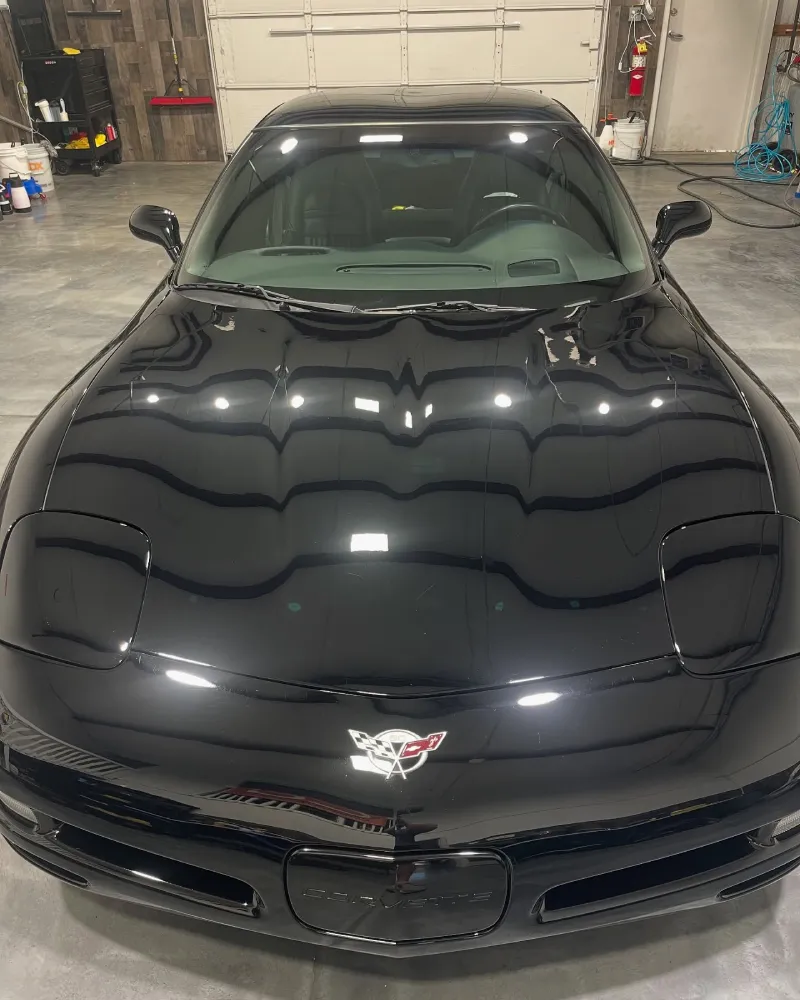
At Done In Detail, windshield protection installation is approached as a controlled technical process rather than a cosmetic upgrade.
Each installation is performed with attention to surface preparation, environmental control, and material selection. The objective is not only to apply a protective layer, but to ensure that optical clarity remains indistinguishable from factory glass after installation.
Technicians evaluate films based on optical consistency, refractive compatibility, and long-term stability under real driving conditions. Installation environments are controlled to minimize dust, humidity fluctuations, and contamination that could affect clarity.
This level of precision is especially important in mixed driving environments such as windshield protection film in Mars Hill, Crossroads, GA, where vehicles are frequently exposed to a combination of highway debris, rural road conditions, and variable weather. In these scenarios, consistency of visibility is directly tied to installation quality and material integrity.
In Summary
Windshield protection film remains optically clear because it is engineered with high-purity TPU materials, refractive-index matching, and precision adhesive systems designed to function as an invisible extension of laminated automotive glass. When installed correctly, it preserves factory-level visibility while adding meaningful protection against debris, UV exposure, and environmental wear.
The difference between exceptional optical clarity and noticeable distortion often depends less on the film itself and more on the quality of the installation. Proper surface preparation, precise application techniques, and attention to detail all play a critical role in achieving the best results. By working with experienced professionals like Done In Detail, vehicle owners can expect an installation that maximizes both visual clarity and long-term protection.
For professional installation and evaluation, contact us today to ensure your windshield protection system is optimized for clarity, safety, and long-term durability.
Frequently Asked Questions
Does windshield protection film affect visibility?
No. When properly installed, modern TPU films are optically neutral and do not alter visibility.
Can it cause distortion over time?
Only if the film is poorly installed or contaminated. Proper installation prevents long-term optical issues.
How long does clarity last?
Typically, several years, depending on environmental exposure, maintenance, and installation quality.
Does it interfere with vehicle sensors or ADAS systems?
No. Modern films are engineered to remain compatible with windshield-mounted cameras and sensors.
Can it be safely removed?
Yes. Professional removal restores the glass without damaging the windshield surface.