
Paint correction restores a deep, reflective shine by permanently removing surface-level defects in your vehicle’s clear coat, such as swirl marks, oxidation, water spotting, and fine scratches. Instead of masking imperfections with temporary fillers or waxes, the process refines the actual painted surface so it reflects light evenly again. The result is a noticeably sharper, clearer, and more “wet-looking” gloss that resembles factory-new paint.
When done correctly, paint correction improves both appearance and long-term paint condition by addressing the root cause of dullness: microscopic surface damage.
Why Paint Loses Its Gloss Over Time
Even well-maintained vehicles gradually lose their original clarity. The cause is not necessarily paint failure, but accumulated micro-damage to the clear coat.
Common contributors include:
- Improper washing techniques (circular wiping, dirty mitts, dry wiping dust)
- Automatic car washes with abrasive brushes
- UV exposure breaks down surface resins
- Road grime, brake dust, and industrial fallout
- Hard water spotting and mineral deposits
These factors create microscopic grooves and high spots in the clear coat. When light hits the surface, instead of reflecting uniformly, it scatters in different directions, creating a dull, hazy appearance.
In real-world conditions, many vehicles in suburban driving environments require professional correction sooner than expected due to frequent short trips and repetitive washing. In some cases, localized services such as paint correction in Cumming, GA, are requested specifically to address this cumulative surface wear.
What Paint Correction Actually Does (Technical Breakdown)
Paint correction is a controlled mechanical refinement process that levels the clear coat at a microscopic scale using abrasive compounds and machine polishers.
It does NOT repaint the surface. Instead, it refines what already exists.
Core Technical Actions
Definition List: Paint Correction Mechanics
- Micro-Level Abrasion: Controlled removal of a thin layer of clear coat to eliminate defects.
- Surface Leveling: Reduces peaks and valleys in the clear coat that distort reflection.
- Defect Removal: Permanently eliminates swirl marks, oxidation, and etching.
- Optical Refinement: Improves how light travels across the painted surface.
- Gloss Restoration: Enhances clarity by improving uniform reflectivity.
The goal is not to remove paint aggressively, but to refine it precisely enough to restore optical clarity.
The Professional Paint Correction Workflow
A proper correction process follows structured stages. Skipping steps leads to uneven results or unnecessary paint removal.
1. Inspection and Paint Assessment
Before any correction begins, technicians evaluate:
- Clear coat thickness using electronic gauges
- Severity and depth of swirl marks
- Previous paint repairs or refinishing work
- Sensitivity of the paint system
This step determines how aggressive or conservative the correction must be.
2. Decontamination Wash Process
The surface must be completely free of contaminants before machine polishing.
Steps include:
- Foam pre-wash to loosen dirt safely
- Hand wash with pH-neutral shampoo
- Chemical iron removal to dissolve embedded particles
- Tar removal for road residue
- Clay bar treatment to remove bonded contaminants
This ensures polishing pads work on paint, not dirt.
3. Test Spot (Critical Calibration Stage)
A small section is corrected first to determine:
- Compound strength needed
- Pad type selection
- Machine speed and pressure
- Number of polishing stages required
This prevents over-correction and ensures predictable results across the entire vehicle.
4. Multi-Stage Machine Polishing
Paint correction is typically performed in stages:
- Cutting Stage: Removes oxidation, deeper swirls, and defects
- Polishing Stage: Refines haze and improves clarity
- Finishing Stage: Maximizes gloss and optical depth
Each stage reduces abrasiveness while increasing clarity.
5. Protection Application
Once the correction is complete, the paint is vulnerable without protection.
Common protection options:
- Ceramic coatings for long-term chemical and UV resistance
- Sealants for mid-term protection and gloss retention
- High-end waxes for aesthetic enhancement
This layer preserves the corrected finish and slows the formation of future defects.
Paint Correction vs Polishing vs Waxing
Understanding the difference prevents unrealistic expectations.
| Service | Purpose | Defect Removal | Durability | Outcome |
| Paint Correction | Permanent surface refinement | High | Long-term | Deep gloss + clarity |
| Polishing | Cosmetic enhancement | Moderate | Short-term | Improved shine |
| Waxing | Protective coating | None | Weeks | Surface gloss |
Paint correction is the only process that permanently improves the actual paint surface.
Tools Used in Professional Paint Correction
High-quality results depend on controlled equipment and proper technique.
Definition List: Equipment Breakdown
- Dual-Action Polisher: Safe oscillating machine that reduces heat and paint risk.
- Rotary Polisher: High-power tool used for heavy defect removal under expert control.
- Cutting Compound: Abrasive solution used to remove surface imperfections.
- Finishing Polish: Ultra-fine abrasive that refines gloss and removes haze.
- Foam/Microfiber Pads: Application tools used depending on the correction stage.
- Paint Thickness Gauge: Ensures safe correction limits are not exceeded.
Each tool plays a specific role in balancing defect removal with paint preservation.
Why Paint Correction Creates a Deep Gloss Effect
Gloss is not just about shine; it is about surface uniformity.
When a surface is uneven, light scatters. When it is smooth and uniform, light reflects cleanly.
Paint correction restores gloss by:
- Flattening microscopic surface imperfections
- Removing swirl-induced light distortion
- Increasing reflectivity consistency
- Enhancing color saturation and depth perception
This is why corrected paint often appears “wetter” or more reflective than untreated paint.
Real-World Observations from Professional Detailing Work
In practical detailing environments, paint condition varies significantly based on usage patterns.
Common findings include:
- Horizontal panels (hood, roof, trunk) show the most swirl concentration
- Dark colors reveal defects more clearly under direct light
- Softer clear coats develop micro-marring faster than harder finishes
- Improper drying of towels often creates uniform swirl patterns
In residential vehicle environments such as Windermere, light swirl accumulation is frequently caused by repetitive automated washing. This is especially noticeable under LED inspection lighting during correction assessment.
For vehicles requiring more targeted restoration work, paint correction in Cumming services are often used to restore clarity and remove accumulated surface wear that builds up over time from routine maintenance habits.
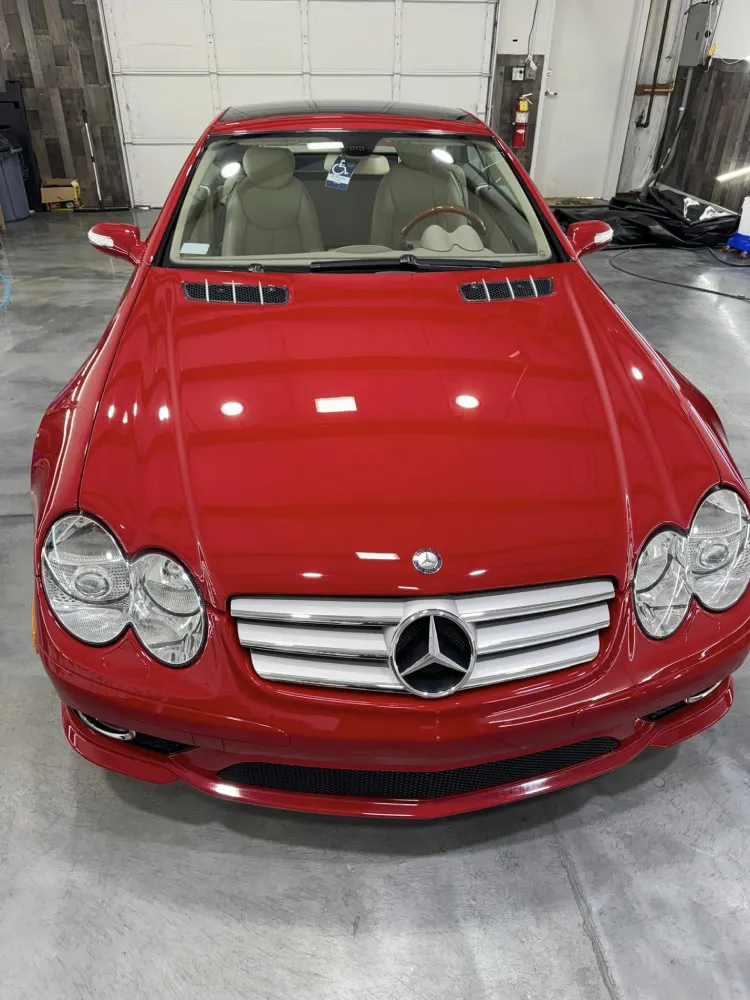
Misconception: Paint Correction Removes Too Much Paint
One of the most common concerns is that paint correction is damaging or overly aggressive.
This is not accurate when performed correctly.
The Technical Reality
- Clear coat thickness is engineered with a safety margin
- Correction removes only microns of material
- Thickness is measured before and after correction
- Technique is adjusted based on paint hardness and condition
Damage only occurs when correction is performed without measurement tools or proper training. Professional correction is a controlled refinement process, not random abrasion.
When Your Vehicle Needs Paint Correction
You may need correction if you notice:
- Swirl marks are visible under sunlight or LED lighting
- Dull or hazy paint appearance even after washing
- Fine scratches that reflect light inconsistently
- Water spotting or etching that does not fully remove
- Loss of depth in darker paint finishes
Vehicles exposed to frequent washing cycles or environmental fallout often require correction every few years, depending on maintenance habits.
In areas with consistent driving exposure and suburban road conditions, services such as Cumming GA, paint correction are commonly used to restore clarity and remove accumulated surface imperfections.
How Paint Correction Impacts Vehicle Value
Beyond aesthetics, paint condition directly influences perceived value.
A well-corrected vehicle:
- Appears newer and better maintained
- Reflects light more evenly in photography and resale inspections
- Reduces visible wear perception
- Enhances buyer confidence in used car markets
Even minor corrections can significantly improve first impressions during resale or trade-in evaluations.
About Done In Detail
Done In Detail specializes in precision automotive paint correction and protective surface enhancement systems. The focus is on controlled defect removal, structured inspection processes, and long-term paint preservation techniques designed to maintain clarity and gloss under real-world driving conditions.
Every service is built around careful measurement, process discipline, and high-level finishing standards that prioritize both appearance and paint safety.
Restoring More Than Shine
Paint correction is not just a cosmetic upgrade; it is a precision restoration process that rebuilds surface clarity at a microscopic level. By removing defects rather than masking them, it restores true gloss, depth, and reflectivity while improving the long-term condition of the paint.
When paired with proper protection, the results from Done In Detail can be maintained for years and can significantly enhance the vehicle’s overall appearance and value.
For professional results and structured correction systems, contact us today.
Frequently Asked Questions (FAQ)
What is paint correction in simple terms?
Paint correction is a professional detailing process that removes surface imperfections like swirl marks, oxidation, and fine scratches from a vehicle’s clear coat to restore gloss and clarity.
How is paint correction different from polishing or waxing?
Polishing improves shine temporarily, and waxing adds protection. Paint correction actually removes defects from the surface, making the improvement permanent until new damage occurs.
Does paint correction remove all scratches?
No. It removes light to moderate clear coat scratches. Deep scratches that penetrate beyond the clear coat cannot be fully removed but can often be reduced in visibility.
How long do paint correction results last?
Results last indefinitely in terms of correction quality, but new swirl marks or defects can develop over time depending on washing habits and environmental exposure.
Is paint correction safe for my vehicle’s paint?
Yes, when performed professionally using paint thickness measurements and controlled machine polishing techniques, it is a safe and widely used restoration process.