
The number of scratches can affect the cost of paint correction, but it is not the only factor that determines pricing. The depth, location, severity, and overall condition of the vehicle’s paint often matter more than simply counting individual scratches. A vehicle with many light imperfections may require less work than one with fewer deep or widespread defects.
Why Does The Number Of Scratches Affect Paint Correction
The number of scratches can affect the time and effort required for paint correction. More affected areas may require additional polishing passes, different pad and compound combinations, or greater attention during the inspection and finishing stages.
However, professional detailers do not simply calculate a price by counting scratches. They evaluate the entire paint surface.
Important considerations include:
- Number of affected panels
- Scratch depth
- Swirl marks and marring
- Paint hardness
- Existing clear coat condition
- Previous correction work
- Desired level of correction
For vehicle owners researching paint correction in Pirkle Woods, GA, understanding these factors can help explain why professional pricing varies from one vehicle to another.
Does Scratch Depth Matter More Than Scratch Quantity
In many cases, scratch depth affects the correction process more than the number of scratches. Light scratches that remain within the clear coat may be reduced through controlled polishing. Deeper scratches can be difficult or impossible to remove completely through paint correction alone.
A professional detailer must determine whether a defect can safely be corrected without removing too much clear coat.
Light Scratches
Definition: Fine imperfections that primarily affect the upper portion of the clear coat.
Correction: These may often be reduced through appropriate polishing techniques.
Moderate Scratches
Definition: More pronounced defects that may require additional correction steps.
Correction: Depending on depth and paint condition, you may need multiple polishing stages.
Deep Scratches
Definition: Scratches that extend deeply into the paint system and may reach the color coat or primer.
Correction: Polishing alone may not remove them, and you may need a different repair approach.
This is why scratch quantity should never be the only consideration when estimating correction work.
How Does Paint Condition Affect Correction Cost
The overall condition of the paint can significantly influence the amount of work required. A vehicle with scratches across multiple panels may need substantially more preparation than one with isolated imperfections.
Paint correction can address various defects, including:
- Swirl marks
- Light scratches
- Oxidation
- Paint haze
- Surface marring
- Reduced gloss
The more widespread the imperfections, the more time may be needed to inspect, prepare, polish, and refine the paint.
Done In Detail takes a condition-based approach to paint correction. The company explains that each correction is based on the vehicle’s condition, with controlled polishing techniques intended to improve clarity without unnecessary steps.
How Is Paint Correction Priced
There is no universal formula for pricing paint correction. Professional detailers generally consider the vehicle’s condition, size, paint characteristics, desired result, and amount of labor involved.
| Pricing Factor | Why It Matters |
| Vehicle Size | Larger vehicles generally have more surface area to correct |
| Paint Condition | More defects can require additional preparation and polishing |
| Scratch Depth | Deeper defects require more careful evaluation |
| Number Of Panels | More affected areas can increase labor time |
| Correction Level | Higher correction goals may require additional polishing stages |
| Paint Characteristics | Different paint systems respond differently to correction |
This approach provides a more accurate estimate than charging a fixed amount based solely on the number of scratches.
Does Every Scratch Need To Be Completely Removed
No. Complete scratch removal is not always the safest or most appropriate objective. Paint correction balances appearance improvement with preserving the vehicle’s clear coat.
A professional detailer may recommend reducing the appearance of a deep scratch rather than attempting complete removal if doing so would require excessive material removal.
This is especially important on vehicles that have previously undergone paint correction. Repeated aggressive polishing can reduce available clear coat, so perform correction with an understanding of the paint’s existing condition.
The goal isn’t to make every defect disappear at any cost. The goal is to achieve a meaningful improvement while preserving the paint system.
What Is The Difference Between Paint Correction And Scratch Repair
Paint correction and scratch repair are related but not identical.
Paint correction uses controlled polishing to reduce suitable surface imperfections and improve paint clarity. It is generally intended for defects that can be safely addressed within the existing paint system.
Scratch repair may involve more extensive techniques when damage extends beyond what polishing can safely correct.
Understanding the difference helps prevent unrealistic expectations. Paint correction can significantly improve a vehicle’s appearance, but it cannot restore every type of physical damage.
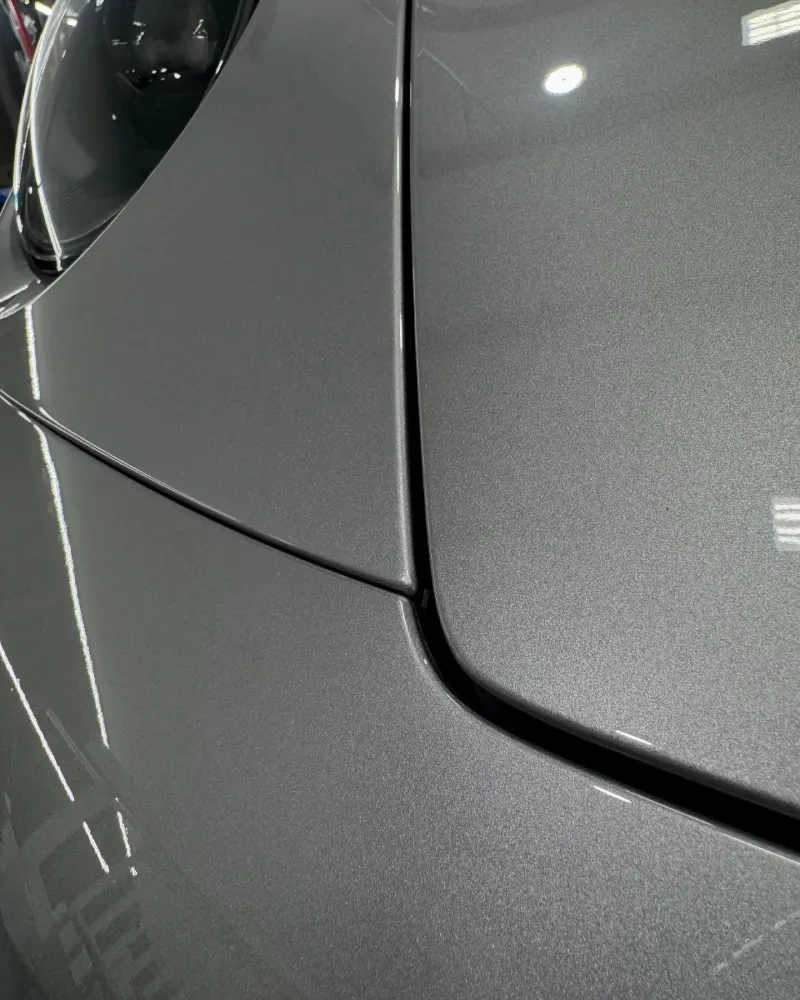
Common Myth: More Scratches Always Mean A Higher Paint Correction Price
A common misconception is that a vehicle with twice as many scratches will automatically cost twice as much to correct. In practice, pricing is more complicated.
A vehicle may have hundreds of very light swirl marks that can be addressed during a relatively straightforward correction. Another vehicle may have only several deep scratches spread across multiple panels that require much more careful work.
The location of the defects also matters. Scratches concentrated on one panel may be easier to address than imperfections distributed throughout the entire vehicle.
Professional pricing should therefore consider the overall condition and labor requirements rather than relying on scratch count alone.
How Does Vehicle Size Affect Paint Correction
Vehicle size can affect labor because larger vehicles have more painted surface area.
For example, correcting a compact sports car generally involves less surface area than correcting a large SUV or truck. Additional panels mean more time for washing, decontamination, inspection, polishing, and finishing.
Vehicle size is therefore commonly considered alongside paint condition and correction goals when developing an estimate for Pirkle Woods, GA paint correction.
What Happens During A Professional Paint Correction
A professional correction begins with careful preparation, not immediately using a polishing machine.
The process may include:
- Inspection: The paint is examined for scratches, swirls, oxidation, stains, and other defects.
- Washing: The exterior is thoroughly cleaned to remove loose contamination.
- Decontamination: Remove bonded contaminants when necessary.
- Paint Evaluation: We assess the finish condition before selecting correction methods.
- Polishing: Controlled polishing reduces appropriate imperfections.
- Refinement: The surface is refined to improve clarity, gloss, and consistency.
- Final Inspection: The finished paint is reviewed under suitable lighting.
Done In Detail describes its paint correction process as condition-based and focused on safe, controlled polishing.
Why Is Paint Preparation Important
Preparation is essential because polishing contaminated paint can interfere with the correction process and potentially introduce additional marring.
A clean, properly decontaminated surface lets the detailer better assess the paint’s true condition. It also provides a better foundation for controlled polishing.
Professional preparation may involve clay treatment or other appropriate decontamination techniques depending on the vehicle’s condition.
The objective is to remove contaminants before correction begins rather than trying to polish through them.
How Does Professional Experience Affect Paint Correction
Paint correction requires judgment as well as equipment. Different paints can respond differently to polishing, and the appropriate combination of pad, compound, polish, pressure, and machine movement depends on the surface.
Experienced professionals know more aggressive correction isn’t always better.
Done In Detail emphasizes experience with luxury, exotic, and performance vehicles and notes that its approach considers factors such as clear coat condition, paint characteristics, and complex body lines.
For vehicle owners seeking paint correction in Pickle Woods, choosing a provider that evaluates the vehicle’s actual condition can help ensure the correction process is appropriate.
Can Paint Correction Prevent Future Scratches
Paint correction improves existing paint but does not prevent new scratches. Proper washing and maintenance remain important after the correction is complete.
Vehicle owners can help protect corrected paint by:
- Using proper washing techniques
- Avoiding abrasive cleaning materials
- Keeping the vehicle properly maintained
- Removing contaminants promptly
- Considering appropriate paint protection
Paint correction restores the finish, while protective products or films can provide additional defense against future environmental and physical exposure.
When Is Paint Correction Worth It
Paint correction can be worthwhile when the vehicle’s paint has lost clarity, gloss, or visual consistency because of manageable surface imperfections.
It may be particularly useful before applying a protective product because improving the paint first can enhance the appearance of the finish beneath that protection.
Vehicle owners in areas such as Hutchinson Pointe, Hickory Ridge, and Greenwood Acres may consider professional correction when a vehicle’s paint no longer has the clarity or gloss expected from a well-maintained finish.
In Summary
The number of scratches can influence paint correction costs, but it should never be the only factor in pricing. Scratch depth, vehicle size, paint condition, affected areas, and the desired level of correction all contribute to the amount of work required.
Done In Detail takes a condition-based approach to paint correction, focusing on careful preparation, controlled polishing, and vehicle-specific recommendations.
Contact Us today to have your vehicle’s paint evaluated and determine what level of correction makes sense for its condition.
People Also Ask
Does more scratches mean more expensive paint correction?
Not necessarily. The depth, location, severity, vehicle size, and overall paint condition can have a greater impact on the amount of work required.
Can paint correction remove deep scratches?
Some deep scratches cannot be completely removed through polishing. A professional should evaluate the defect to determine whether it can be safely reduced.
How many scratches can paint correction fix?
There is no fixed number. Paint correction can address suitable imperfections across multiple panels, but the achievable result depends on the condition and depth of the defects.
Is paint correction safe for clear coat?
When performed correctly, controlled paint correction is designed to improve the finish while preserving as much clear coat as reasonably possible. Aggressive or unnecessary polishing can remove excessive material.