
Paint protection film leaves adhesive residue because its acrylic adhesive chemically ages over time. UV exposure, heat, moisture, and oxidation cause the adhesive to harden and bond more strongly to the vehicle’s clear coat than to the film itself. When the film is removed, especially after its service life or with improper techniques, the adhesive separates from the film and remains on the paint.
The Science of PPF Adhesives
Modern paint protection films are advanced multi-layer systems, not simple plastic stickers. They are designed to absorb impacts, resist weathering, and protect the vehicle’s factory finish.
A typical PPF consists of:
- Self-healing topcoat – Resists scratches and restores minor swirl marks with heat.
- Polyurethane core layer – Absorbs impacts from road debris and stone chips.
- Pressure-sensitive acrylic adhesive (PSA) – Bonds the film securely to the paint while allowing safe removal when properly maintained.
Premium PPF manufacturers formulate acrylic-based adhesives to provide:
- Strong, long-lasting adhesion without harming the factory clear coat.
- Flexibility to withstand temperature changes and road vibrations.
- Clean removal when the film is replaced within its recommended service life.
Key Terms and Specifications
Pressure-Sensitive Adhesive (PSA): A non-reactive polymer matrix that forms an immediate physical bond when mechanical pressure is applied, adhering to a substrate without requiring solvent activation or thermal curing.
Cohesive Strength: The internal molecular bonding force within the adhesive layer that determines how well the adhesive maintains its structural integrity under mechanical stress.
Adhesive Strength: The bonding force between the adhesive and the vehicle’s polyurethane clear coat, which determines how securely the film adheres to the painted surface.
Thermal Degradation: The irreversible chemical breakdown of polymer chains under prolonged exposure to elevated temperatures and ultraviolet (UV) radiation, resulting in embrittlement, reduced performance, and potential structural failure.
Cross-Linking: The formation of chemical bonds between polymer chains, increasing the material’s hardness and chemical resistance while reducing its flexibility and elasticity over time.
Primary Failure Modes Causing Adhesive Separation
When paint protection film peels back cleanly, the cohesive strength of the adhesive exceeds its adhesive strength to the car’s clear coat. When it leaves a sticky residue, a chemical shift has inverted this relationship.
Several environmental and physical variables contribute directly to this material failure:
| Failure Variable | Chemical & Mechanical Breakdown | Physical Result on Paintwork |
| Exceeded Service Life | Chronic UV exposure forces continuous polymer cross-linking, turning a flexible gel into a rigid structure. | The adhesive crystallizes, forming a permanent bond to the paint while shearing completely off the urethane sheet. |
| High Heat & Thermal Cracking | Sustained engine heat and solar loading trigger thermal degradation of the acrylic polymers. | The adhesive layer liquefies slightly, migrates into paint pores, and hardens into an irregular, gummy residue. |
| Substandard Adhesive Engineering | Lower-tier or counterfeit films use cheap industrial glues that lack specialized automotive UV stabilizers. | The adhesive destabilizes rapidly, breaking down into a messy film within 12 to 24 months of installation. |
| Incorrect Removal Angle | Pulling the film at a 90- or 180-degree angle places significant mechanical stress on the film layers. | The sudden tension snaps the adhesive layer in half, leaving the bottom layer stuck tightly to the panel. |
Environmental conditions influence how paint protection film fails. For example, our team removed a nearly decade-old clear bra that had degraded from prolonged UV exposure, leaving a thick layer of adhesive residue on the hood.
Myth Debunked: “Premium Films Are Immune to Residue”
A persistent misconception within the automotive community is that opting for premium, top-tier paint protection films completely eliminates the risk of adhesive residue when they are removed. Many vehicle owners assume that paying a premium price shields them from experiencing glue transfer or paint staining.
This is a complete misunderstanding of polymer chemistry. No pressure-sensitive adhesive is completely immune to the laws of thermodynamics and chemical breakdown. Whether a film is a budget brand or an industry-leading option, its acrylic foundation will eventually alter its molecular structure when subjected to years of intense solar radiation, environmental acids, and thermal movement.
The true differentiator of premium films is their predictability and chemical stability during their stated warranty periods (typically 5 to 10 years). High-end films use advanced UV inhibitors to slow down cross-linking. However, if a vehicle is left in harsh environments for a dozen years without maintenance, even the highest-tier film will leave residue behind. Preserving your investment requires following real-world lifecycles rather than relying on marketing myths about permanent adhesives. Seeking professional paint protection film in Cumming assistance ensures that aging film installations are carefully monitored and swapped out before severe cross-linking takes place.
Step-by-Step Professional Protocol for Safe Residue Elimination
When dealing with a panel covered in leftover adhesive residue, using aggressive scraping methods or harsh industrial chemicals can ruin your paint. Removing it safely requires a methodical approach: softening the hardened acrylic matrix before gently wiping it away.
The Professional Removal Sequence
- Thermal Optimization
Never attempt to scrape or clean cold adhesive. Use a commercial-grade surface steamer or a digital heat gun to raise the panel temperature to 120°F-140°F. This thermal input softens the hardened acrylic structure, reducing its grip on the clear coat. - Chemical Breakdown
Apply a specialized, clear-coat-safe automotive adhesive dissolver (such as a premium citrus-based solvent or an isopropyl alcohol blend). Allow the solvent to dwell on the residue for 2 to 4 minutes to liquefy the cross-linked bonds. - Controlled Mechanical Dissolution
Using a soft plastic razor blade held at a flat 15-degree angle, or a plush 350 GSM microfiber towel, gently push the softened glue away in short, uniform strokes. Do not press down hard on the paint surfaces. - Surface Neutralization
Wipe away any remaining chemical sludge with a fresh microfiber towel. Immediately clean the area with a dedicated automotive shampoo or a surface prep spray to neutralize the solvent and prevent any paint etching.
Professional Safety Warning: Avoid using heavy industrial solvents like acetone, lacquer thinner, or standard hardware-store paint strippers. These aggressive chemicals can easily soften and dissolve your vehicle’s factory clear coat, leading to permanent paint damage.
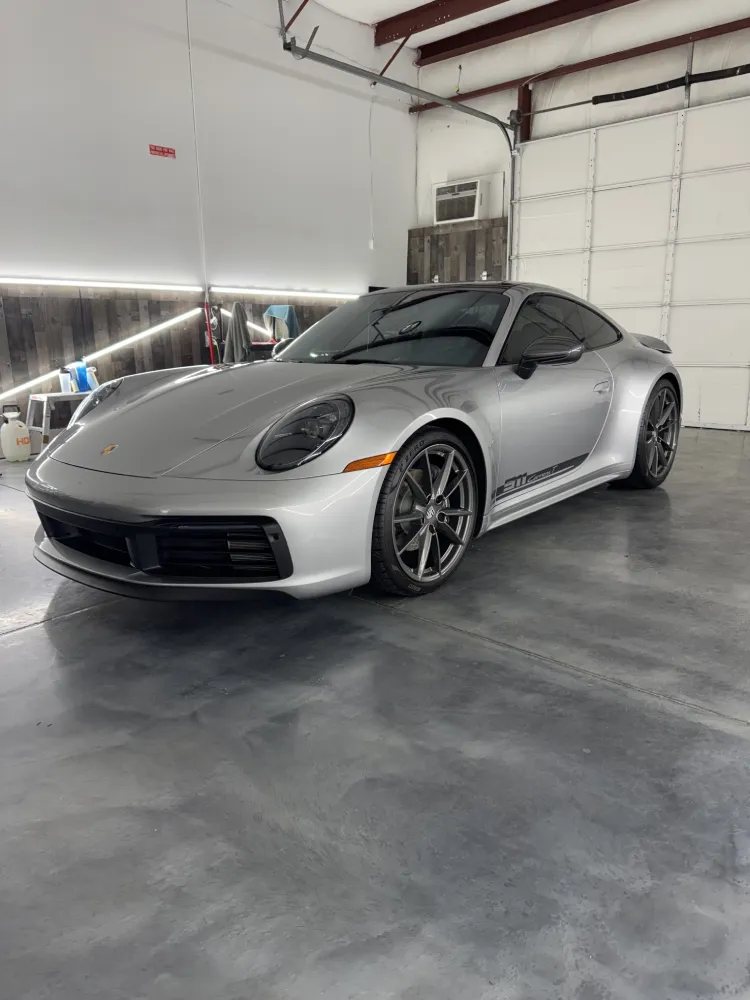
Implementing this level of care is essential when removing paint protection film in Cumming, GA, especially on high-value vehicles. During a restoration project for a local client, our detailers carefully softened and removed hardened adhesive from a custom paint finish while preserving the factory clear coat.
The Risk of DIY vs. The Value of Precision Restoration
While internet forums frequently suggest cheap DIY hacks like using standard WD-40, aggressive household degreasers, or abrasive clay bars, these methods often cause costly paint defects. Without proper tools and temperature control, amateur removal efforts easily introduce deep scratches, micro-marring, and clear-coat failure.
Professional detailing facilities use specialized tools, like high-volume, temperature-controlled steam machines, to safely handle delicate vehicle surfaces. This targeted heat softens both the film and the adhesive simultaneously, greatly minimizing the risk of glue separation.
Choosing a premium Cumming, GA, paint protection film provider ensures that your vehicle is treated with specialized care from start to finish. For example, during a paint correction audit for an exotic vehicle in Vickery, our team used advanced digital heat monitors to lift a failing clear bra without leaving any surface damage. Entrusting your car to seasoned professionals guarantees that your factory finish remains pristine and your long-term automotive investment is fully protected.
Advanced Long-Term Maintenance and Prevention
Proper maintenance slows adhesive degradation and extends the life of paint protection film.
- Apply a ceramic coating: Use a coating designed for polyurethane film to improve UV resistance and protect the adhesive from sun damage.
- Remove contaminants promptly: Clean bird droppings, bug splatter, tree sap, and other acidic debris with a pH-neutral car shampoo to prevent chemical damage.
- Store in a controlled environment: Keep the vehicle in a garage or other sheltered area when possible to reduce UV exposure and temperature fluctuations, which can stress the adhesive.
Protect Your Investment with Done In Detail
Safely clearing away stubborn, baked-on adhesive requires real technical expertise, patience, and professional-grade tools. Don’t risk scratching your vehicle’s beautiful factory finish with unpredictable DIY methods or harsh, store-bought chemicals.
At Done In Detail, we specialize in professional paint protection film installations, paint correction, and safe film removal. We treat every vehicle with absolute precision to keep your clear coat flawless and your automotive asset looking its best.
Ready to restore your vehicle’s brilliant shine? Contact Us today to speak with our detailing specialists and schedule your premium vehicle care consultation.
Frequently Asked Questions
Can standard consumer products like Goo Gone safely remove automotive adhesive?
No. Household Goo Gone can damage automotive finishes or leave residue. Use an automotive-grade adhesive remover instead.
How long can a clear bra stay on a vehicle before removal becomes hazardous?
Most films should be removed within 5–10 years. In hot, sunny climates, inspect or replace them around 5–6 years.
Why does adhesive stick more aggressively to plastic bumpers than to metal panels?
Plastic retains heat differently, accelerating adhesive aging and increasing the likelihood of residue during removal.
Does a yellowed film mean the adhesive layer has failed?
Not always. Yellowing usually indicates film aging, but it can also signal that the adhesive is beginning to degrade.
Can paint correction fix damage caused by aggressive adhesive scraping?
It can remove light scratches, but damage through the clear coat requires repainting.