
Paint correction is safely performed on thin-clear-coat luxury vehicle paint systems by measuring paint thickness before polishing, selecting the least aggressive polishing method that achieves the desired level of correction, carefully controlling heat and machine pressure, and protecting the finish afterward. This method restores gloss, minimizes the appearance of swirl marks and light scratches, and preserves the vehicle’s limited factory clear coat, helping maintain both its appearance and long-term value.
Luxury vehicles are known for their refined paint finishes, but many modern models also feature thinner clear-coat systems than those on older vehicles. While these finishes provide exceptional depth and clarity, they also require a more conservative approach during paint correction. Every polishing pass removes a microscopic amount of protective clear coat, making precision, experience, and careful planning essential. Instead of attempting to eliminate every visible imperfection, professional detailers focus on preserving the integrity of the finish while achieving the greatest possible improvement in gloss, clarity, and overall appearance.
Understanding Thin-Clear-Coat Luxury Vehicle Paint Systems
Modern automotive paint systems consist of multiple layers designed to protect the vehicle and create a durable, attractive finish. These layers include the primer, the colored base coat, and the clear coat. The clear coat is the transparent outer layer that shields the paint from ultraviolet rays, oxidation, environmental contaminants, and everyday wear while providing the deep gloss expected from a luxury vehicle.
Most cosmetic imperfections, including swirl marks, light scratches, water-spot etching, and oxidation, occur within the clear coat. Paint correction in The Polo Fields works by carefully leveling the surrounding clear coat until these imperfections become significantly less visible or disappear. Because clear coat cannot regenerate after it has been polished away, preserving as much of this layer as possible is always the primary objective.
Why Thin Clear Coats Require a Different Approach
Not all factory paint systems respond the same way to polishing. Paint hardness, curing methods, manufacturing processes, previous detailing history, and environmental exposure all influence how safely paint correction can be performed.
Before beginning any correction, experienced technicians evaluate several important factors:
- Remaining paint thickness
- Previous correction history
- Paint hardness
- Type and severity of defects
- Panel condition
- Evidence of previous repainting
This assessment allows the correction process to be customized for the specific vehicle rather than relying on a standard polishing procedure.
For vehicle owners researching paint correction in the Polo Fields, GA, understanding this evaluation process helps explain why reputable professionals spend time inspecting a vehicle before turning on a polishing machine. Proper preparation significantly reduces the risk of unnecessary clear coat removal while improving the quality of the finished result.
Signs Your Luxury Vehicle May Need Paint Correction
Not every paint defect requires immediate correction, but several visible signs may indicate that a professional evaluation is beneficial. Early correction often requires less polishing than waiting until defects become more severe.
Common indicators include:
- Swirl marks are visible under sunlight or LED lighting
- Fine scratches caused by improper washing techniques
- Water spot etching that remains after washing
- Oxidation or dull paint that has lost its original gloss
- Holograms or buffer trails from previous machine polishing
- Reduced paint clarity and reflections
Because luxury vehicles often feature sophisticated paint systems, identifying these issues early allows technicians to use more conservative correction methods while preserving valuable clear coat.
Comparison Table: Thin vs. Standard Clear Coat
| Feature | Thin Clear Coat | Standard Clear Coat |
| Safe correction margin | Limited | Moderate |
| Heat tolerance | Lower | Higher |
| Risk of over-polishing | Higher | Lower |
| Future correction potential | Fewer polishing cycles | More polishing cycles |
| Precision required | Very High | Moderate |
Step-by-Step Process for Safe Paint Correction
Step 1: Comprehensive Inspection
Every professional paint correction begins with a detailed visual inspection under specialized lighting. Bright LED lighting reveals swirl marks, scratches, oxidation, buffer trails, and other defects that may not be visible under normal conditions.
A digital paint thickness gauge is then used to measure coating depth across every panel. These readings help identify previous repairs, unusually thin areas, and variations in paint thickness that influence the safest correction strategy.
Step 2: Surface Decontamination
Before polishing, the paint must be thoroughly cleaned and decontaminated. Embedded contaminants can become trapped between the polishing pad and the paint, creating additional scratches during correction.
The decontamination process generally includes:
- pH-balanced washing
- Iron particle removal
- Tar removal
- Clay bar treatment
- Final surface preparation
A clean surface allows polishing abrasives to work efficiently while minimizing unnecessary wear on the clear coat.
Step 3: Test Spot Development
Rather than correcting the entire vehicle immediately, professionals first polish a small test section. This allows them to determine the least-aggressive combination of pad, polish, machine speed, and technique that produces the desired level of correction.
Using a test spot helps preserve paint thickness across the remainder of the vehicle and establishes a repeatable process for consistent results.
Step 4: Controlled Machine Polishing
Dual-action polishers are widely considered the safest option for correcting modern luxury paint systems because they reduce concentrated heat buildup while delivering consistent defect removal.
Throughout polishing, technicians monitor:
- Surface temperature
- Machine speed
- Pad cleanliness
- Working pressure
- Arm movement
Multiple light polishing passes are generally preferred over a single aggressive correction cycle because they reduce unnecessary clear coat removal and improve finish quality.
Step 5: Refinement and Finishing
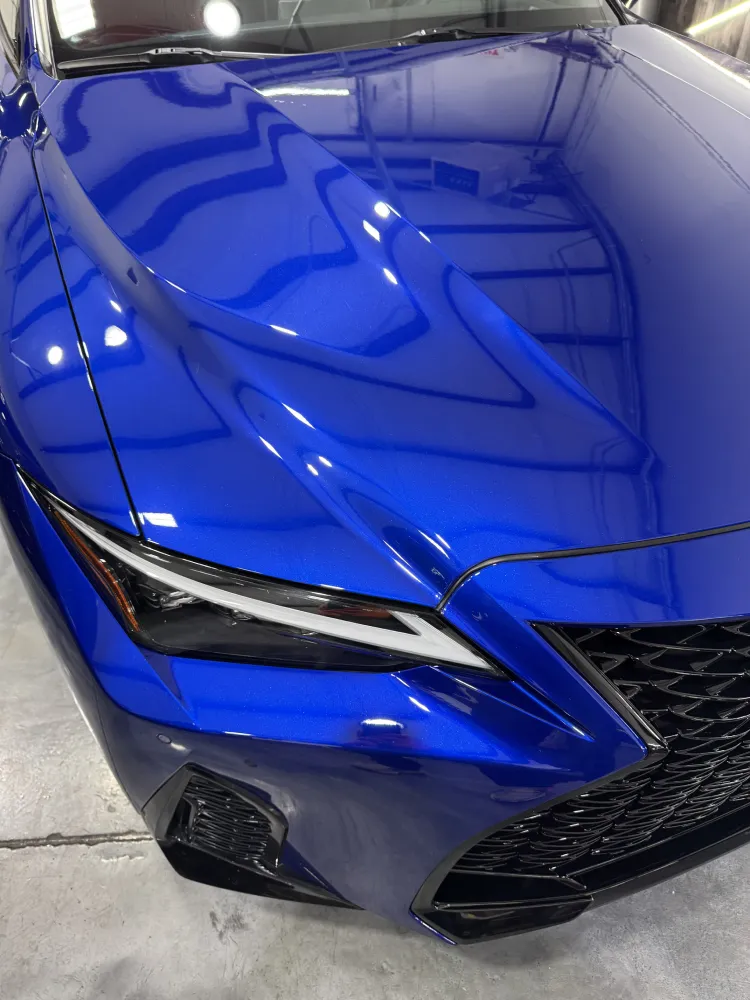
Once the primary defects have been addressed, a finishing polish is used to refine the surface and eliminate any microscopic haze created during earlier polishing stages. This final step enhances depth, clarity, and reflection while producing the crisp, mirror-like finish associated with professional paint correction.
Step 6: Long-Term Protection
After the correction is complete, protecting the restored finish is essential. Ceramic coatings, premium paint sealants, or high-quality waxes provide a protective barrier that helps resist environmental contaminants, ultraviolet exposure, and routine wear while making ongoing maintenance easier.
Proper Maintenance After Paint Correction
The longevity of paint correction depends largely on how the vehicle is maintained afterward. Even the highest-quality correction can gradually lose its appearance if improper washing techniques introduce new swirl marks and scratches.
To help preserve the restored finish, vehicle owners should:
- Wash using the two-bucket method with quality microfiber wash mitts.
- Dry with clean microfiber drying towels instead of bath towels or chamois.
- Avoid automatic brush car washes that can create swirl marks.
- Remove bird droppings, bug residue, and tree sap promptly.
- Apply maintenance products recommended for ceramic coatings or paint sealants.
- Schedule periodic inspections to assess the condition of the protective coating.
Following proper maintenance practices helps maximize the lifespan of both the paint correction and any protective coating, allowing the vehicle to retain its gloss and clarity for years.
Safe vs. Aggressive Paint Correction
| Safe Paint Correction | Aggressive Paint Correction |
| Paint thickness measured | No paint measurements |
| Least aggressive products first | Heavy compounds used immediately |
| Controlled heat management | Excessive heat generation |
| Multiple controlled polishing passes | Maximum correction in one pass |
| Focus on preservation | Focus on maximum defect removal |
Applying Our Precision Correction Method to Solve This
At Done In Detail, every installation in The Polo Fields, GA, paint correction service begins with understanding the vehicle rather than assuming every paint system behaves the same way. A structured evaluation, careful paint measurements, and controlled polishing techniques help achieve meaningful improvements while preserving the original factory finish.
Each correction plan is customized based on the paint condition, defect severity, and the remaining clear coat thickness. This disciplined approach reduces unnecessary wear and tear and provides consistent, long-lasting results for luxury vehicles.
Common Myth: More Aggressive Compounds Produce Better Results
One of the most common misconceptions in automotive detailing is that stronger compounds automatically produce superior results. In reality, aggressive polishing removes more clear coat than necessary and can create additional defects that require further refinement.
Professional paint correction focuses on achieving the greatest improvement with the least amount of clear coat removal. This philosophy protects the finish while extending its lifespan.
About Done In Detail
Done In Detail specializes in professional automotive detailing services, emphasizing paint preservation, precision workmanship, and long-term vehicle care. Every vehicle is evaluated individually, allowing the team to tailor the correction process to the specific condition of the paint rather than relying on a standardized approach. This attention to detail helps deliver exceptional visual results while protecting the integrity of the factory finish.
In Summary
Paint correction on thin-clear-coat luxury vehicle paint systems requires precision, patience, and a commitment to preserving the factory finish. By combining paint thickness measurements, careful product selection, controlled machine polishing, and durable paint protection, experienced professionals such as Done In Detail can dramatically improve a vehicle’s appearance while helping maintain the long-term integrity of its finish.
If you’re ready to restore your vehicle’s finish with a preservation-first approach, contact us today to schedule a professional paint evaluation and discuss the best correction strategy for your vehicle.
Frequently Asked Questions
Is paint correction safe for thin-clear-coat luxury vehicles?
Yes. When performed using proper measurements, conservative polishing techniques, and professional equipment, paint correction is safe for modern luxury paint systems.
Can every scratch be removed?
No. Deep scratches that extend beyond the safe correction depth should remain to preserve the clear coat.
Should ceramic coating be applied after paint correction?
Applying a ceramic coating helps preserve the corrected finish and makes routine maintenance easier.