
Investing in high-quality paint protection film is worth the cost because it provides a self-healing, optically clear barrier that prevents rock chips, chemical etching, and UV degradation. This long-term preservation strategy maintains the factory finish, significantly increasing resale value while eliminating the need for future paint correction.
The Engineering of High-Performance Surface Protection
When evaluating the best options for paint protection film in Cumming GA, it is essential to look beyond the surface level. It is a sophisticated, multi-layered polyurethane system engineered to dissipate the energy of high-velocity impacts from road debris. Unlike the “clear bras” of the early 2000s, which were prone to yellowing and cracking, contemporary films utilize advanced aliphatic polyurethane chemistry to remain invisible while providing rugged durability.
The science of energy displacement is what makes these films truly remarkable. When a stone strikes a protected panel at highway speeds, the thermoplastic polyurethane (TPU) layer compresses, absorbing the kinetic energy and spreading the force across a wider surface area. This prevents the impact from reaching the brittle clear coat underneath.
Technical Specifications & Performance Features
- Thermoplastic Polyurethane (TPU): The structural core of the film, providing high elasticity and “memory.” This allows the material to contour to complex body lines and deep recesses without thinning or losing its protective properties.
- Self-Healing Cross-Linked Polymers: A specialized top coat that uses ambient heat, from sunlight or the engine, to allow the polymer chains to “flow” back into their original state. This effectively erases light swirl marks and wash-induced scratches that would otherwise dull a car’s finish.
- Embedded Hydrophobic Layer: A factory-fused ceramic layer that lowers surface energy. This creates a high water-contact angle, causing water and environmental contaminants to bead and slide off, simplifying the maintenance cycle and reducing the risk of water spotting.
- Advanced Pressure-Sensitive Adhesive (PSA): A high-tack, low-initial-bond adhesive that allows for repositioning during installation but cures to a permanent, crystal-clear bond that resists lifting at the edges.
Comparative Analysis: Professional Grade vs. Entry-Level Protection
The market is flooded with various grades of protective films. However, the distinction between a budget “clear bra” and a high-performance installation is vast. A premium installation is defined by both the material quality and the precision of the application, often involving “tucked edge” techniques where the film is wrapped behind the panel.
| Feature | Entry-Level “Clear Bra” | High-Performance PPF |
| Typical Lifespan | 3–5 Years | 10–12 Years |
| Optical Clarity | Prone to “Orange Peel” texture | Mirror-like, invisible finish |
| Impact Resistance | Thin (low mil thickness) | Thick, energy-displacing TPU |
| Stain Resistance | Absorbs oils and environmental soot | Resists yellowing and staining |
| Warranty | Limited manufacturer defects | Comprehensive (Lifting/Staining/Yellowing) |
The Craftsman’s Role in Surface Integrity
The highest standard for paint protection film in Cumming is found in low-volume, high-precision environments. While high-volume “production shops” focus on rapid turnover, the most reliable results come from a hands-on approach where the owner is directly involved in each project to ensure the level of quality clients expect.
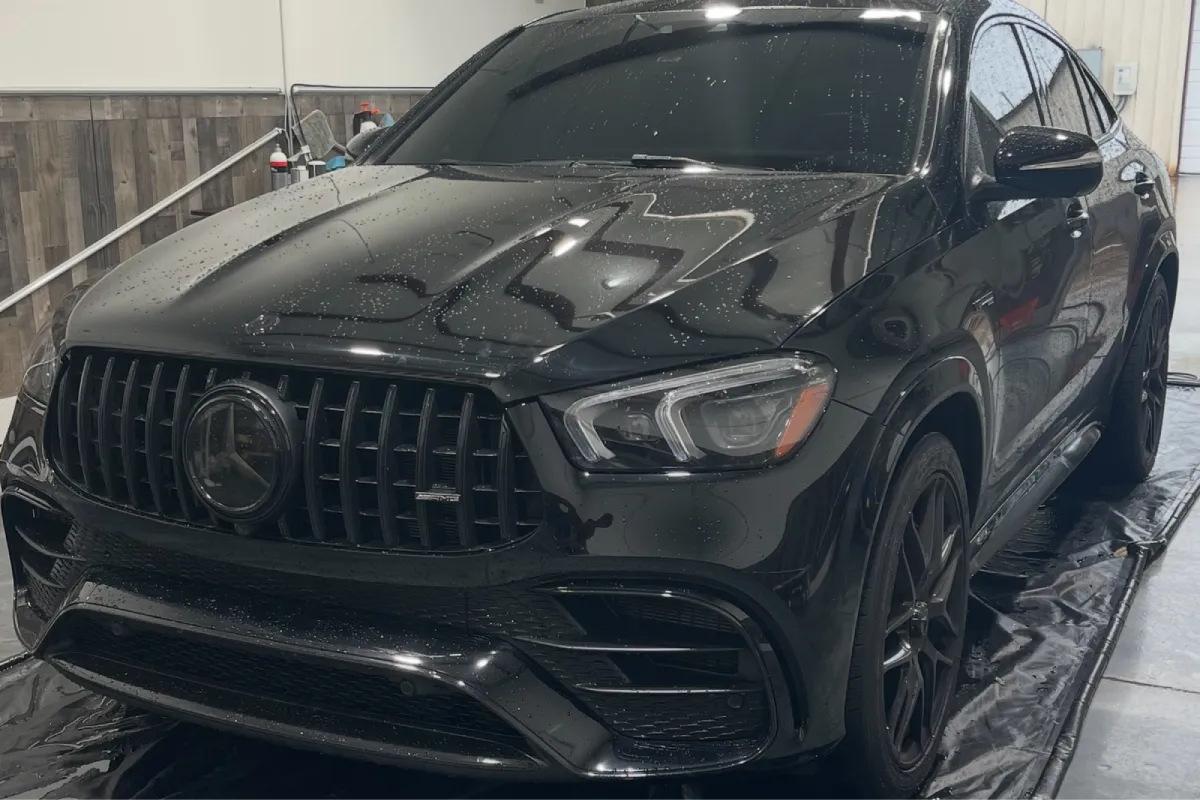
This level of scrutiny is critical during the decontamination phase. A vehicle may look clean on the showroom floor, but it is often covered in “rail dust” (iron particles) from transport. For example, during a recent project for a client in Vickery Village, we discovered heavy industrial fallout on a brand-new luxury SUV. If film is applied over these contaminants, they will eventually oxidize under the film, creating permanent damage. Our manual clay bar treatment and chemical iron removal ensure the surface is surgically clean before the first piece of film is laid. A 5 Star Google Rating isn’t just about the finished look; it’s about the invisible preparation that ensures the film lasts for a decade.
Debunking the Myth: “PPF Is Only for Exotic Vehicles”
A common industry misconception is that it is an unnecessary luxury reserved only for six-figure supercars or vintage collectibles. In reality, modern automotive manufacturing has made Cumming, GA, paint protection film a practical necessity for daily drivers.
In recent years, manufacturers have shifted to water-based paints to comply with environmental regulations. While better for the planet, these paints are significantly softer and thinner than the solvent-based paints used in the past. This means your standard family SUV is more susceptible to “road rash” than ever before.
Whether you are commuting through Polo Fields or driving on construction-heavy corridors, your vehicle faces a constant barrage of grit. Protecting a standard vehicle ensures that when it comes time for trade-in, the paint remains in showroom condition. This preservation often results in a trade-in premium that far outweighs the initial installation cost, effectively making the PPF a “self-paying” investment.
Strategic Maintenance and Long-Term Preservation
One of the most overlooked benefits of premium PPF is the reduction in long-term maintenance costs. Traditional paint requires regular polishing (paint correction) to remove the fine scratches and swirls that accumulate during the washing process. Every time a car is polished, a small layer of the clear coat is removed.
With a self-healing film, you are no longer “consuming” your clear coat. The film takes the abuse, heals itself, and maintains its gloss. For owners who are meticulous about their vehicle’s appearance, this eliminates the need for expensive multi-stage detailing every year.
- Chemical Resistance: Premium films are engineered to resist damage from acidic bird droppings, bug guts, and road salt, which can etch into unprotected paint within hours.
- UV Protection: Constant exposure to the Georgia sun can cause paint to oxidize and lose its depth. PPF acts as a high-SPF sunscreen for your car, blocking harmful UV rays.
- Physical Barrier: Beyond rock chips, PPF protects against “door dings” in parking lots and accidental scuffs from wedding rings or keys near door handles.
While working with a client in Windermere, we noted that their vehicle required zero paint correction after three years of heavy daily use, simply because the PPF had absorbed all environmental wear.
Technical Execution: The Done In Detail Standard
At Done In Detail, we marry precision software-cut patterns with manual customization. Many shops use “out-of-the-box” templates that leave 1/8th of an inch of exposed paint at the edges. We modify these templates to allow for wrapped edges, ensuring the Cumming paint protection film installation is virtually undetectable.
Our commitment to a 5 Star Google Rating is rooted in our hands-on philosophy. We do not delegate the critical steps of alignment and heat-sealing to entry-level technicians. By maintaining an owner-operator model, we ensure that every square inch of the film is bonded perfectly, with no “silvering” (adhesive distortion) or trapped debris. We treat your vehicle as a long-term asset, providing the same level of care regardless of whether it’s a track-ready sports car or a dependable family commuter.
Conclusion: Securing Your Investment
Premium paint protection film is the only way to truly “stop time” for your vehicle’s exterior. It is an insurance policy against the unpredictable nature of the road, protecting you from the frustration of that first rock chip on a new car. By combining world-class materials with a dedicated, owner-involved installation process, you secure both the aesthetic beauty and the financial value of your car.
At Done In Detail, we believe that level of protection should be the standard for every vehicle we work on, because preserving your finish means preserving your investment and pride of ownership.
Ready to shield your vehicle with the industry’s best? Contact us today to schedule a consultation. Experience the peace of mind that comes from a hands-on approach and a commitment to perfection.
People Also Ask (FAQ)
Is PPF better than a Ceramic Coating?
They are complementary, not competitive. They offer physical impact protection against rocks and debris, whereas Ceramic Coatings offer chemical protection and extreme gloss. For the best results, we recommend a “track pack” of PPF on high-impact areas (hood, bumper, mirrors) and a ceramic coating over the rest of the vehicle.
How long does a professional installation take?
A high-quality installation typically requires a 3-to-5-day window. This allows for an exhaustive decontamination process, precision fitting, and, most importantly, a 24-hour “dwell period.” During this time, we monitor the film for any edge lifting as the moisture evaporates, ensuring the car is perfect before it is handed back to you.
Will the film turn yellow over time?
Not with modern premium films. Yellowing was a failure of older “aromatic” polyurethanes. The “aliphatic” TPU used in our installations is UV-stable. We back this with a manufacturer’s warranty that specifically covers yellowing, cracking, and staining.
Can I wash my car normally after installation?
Yes, though we recommend waiting 7 days for the film to fully cure. After that, we advise using the “two-bucket” wash method and avoiding high-pressure sprayers directly against the edges of the film.